The challenge
Sales teams were losing hours to a search problem. Answering a single client question meant digging through scattered documents, old decks, and outdated presentations, and the answer was only as good as whoever happened to remember the project. Slow replies cost deals, and every departing team member took a piece of the company's project knowledge with them.
A generic AI chatbot was not an option: in a sales conversation, a confidently invented number or a technology the team never used is worse than no answer at all. Whatever we built had to be fast, and it had to be provably grounded in real project content.
What we built
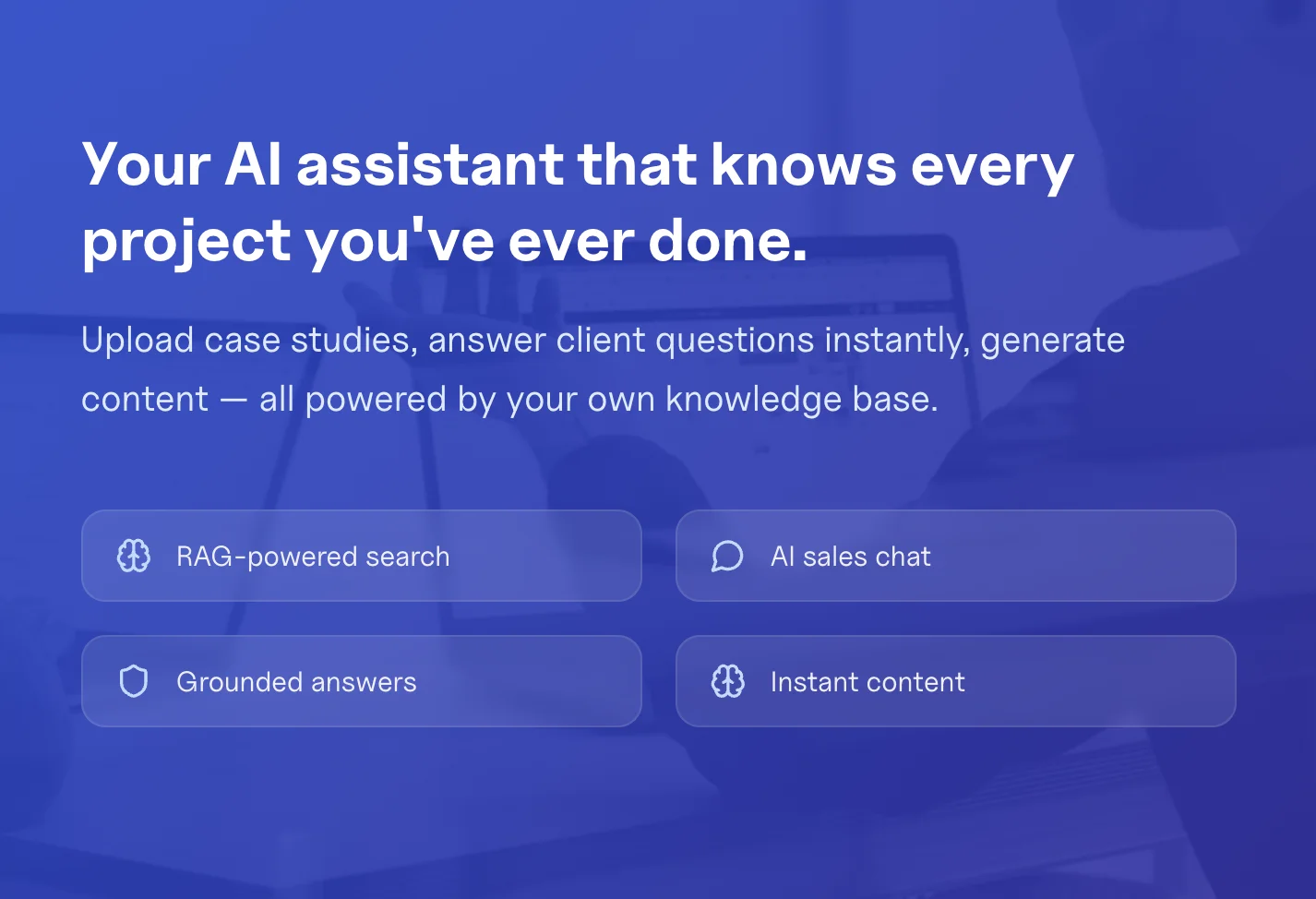
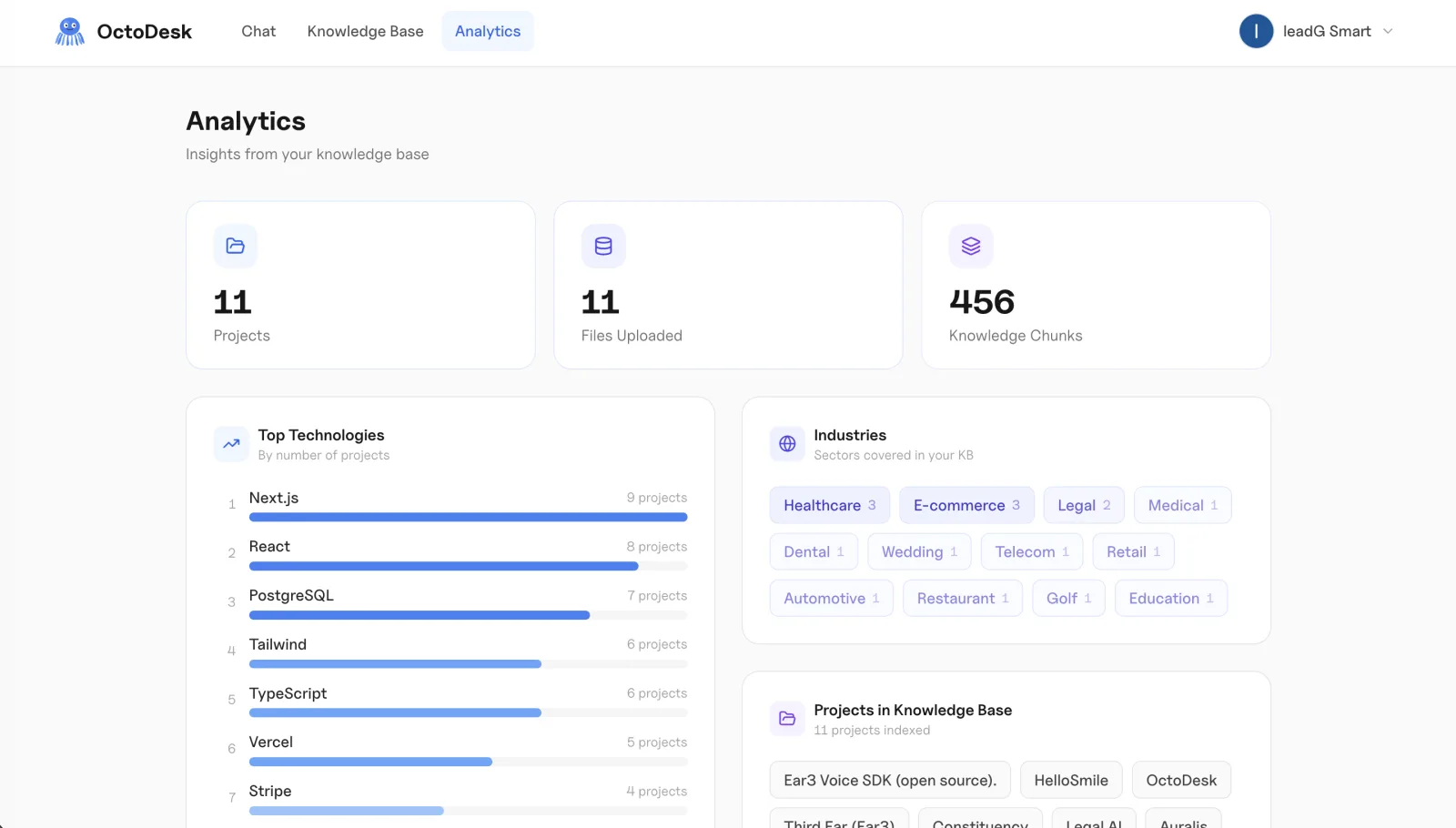
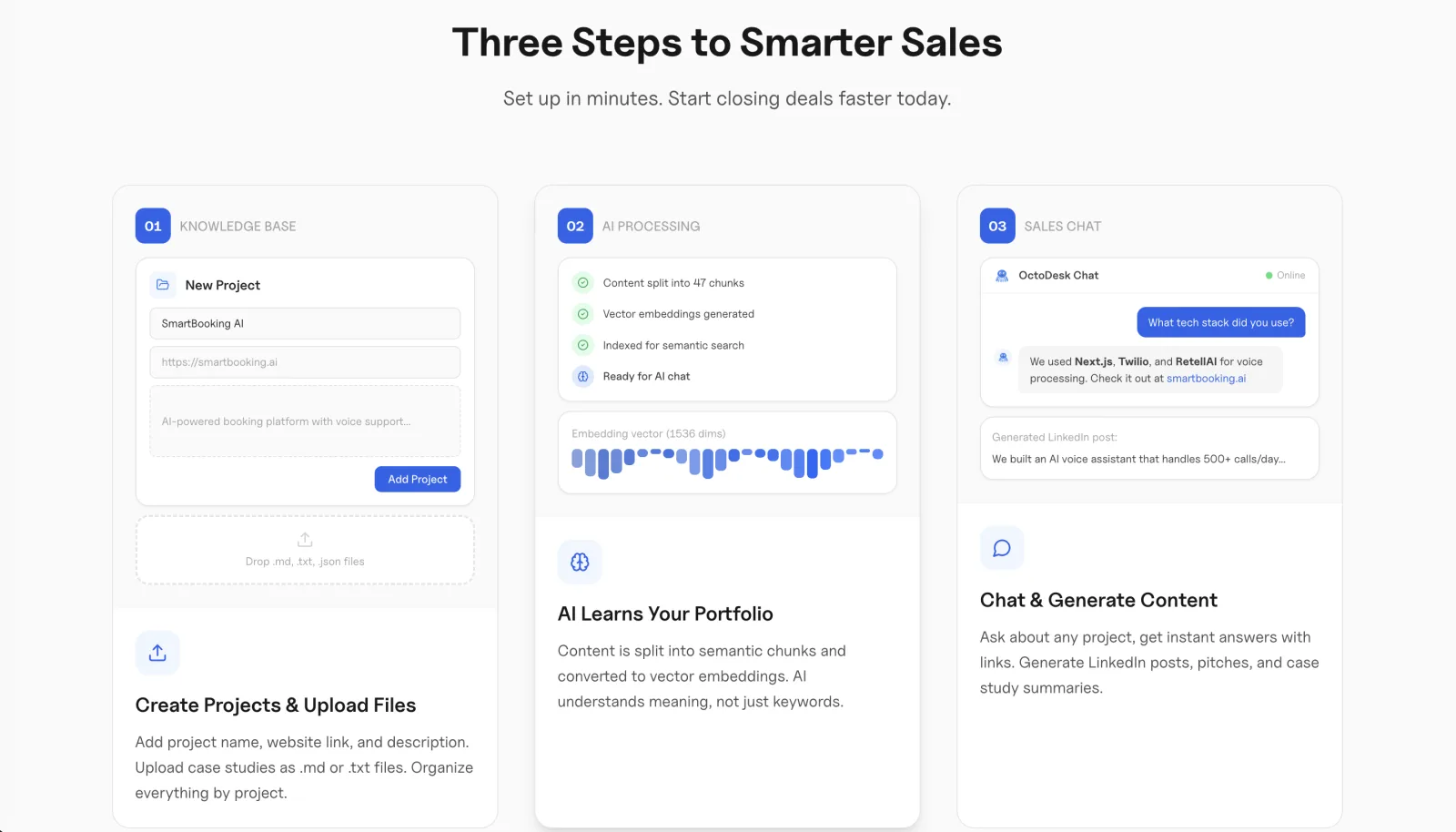
We built OctoDesk end to end: an AI-powered sales knowledge base that captures all project knowledge in one searchable place. Teams create projects, upload case studies as .md, .txt or .json files, and the platform splits each document into semantic chunks, generates vector embeddings, and indexes them in PostgreSQL with pgvector. Retrieval works on meaning rather than keywords, so a question about voice assistants surfaces the right project even when the wording does not match.
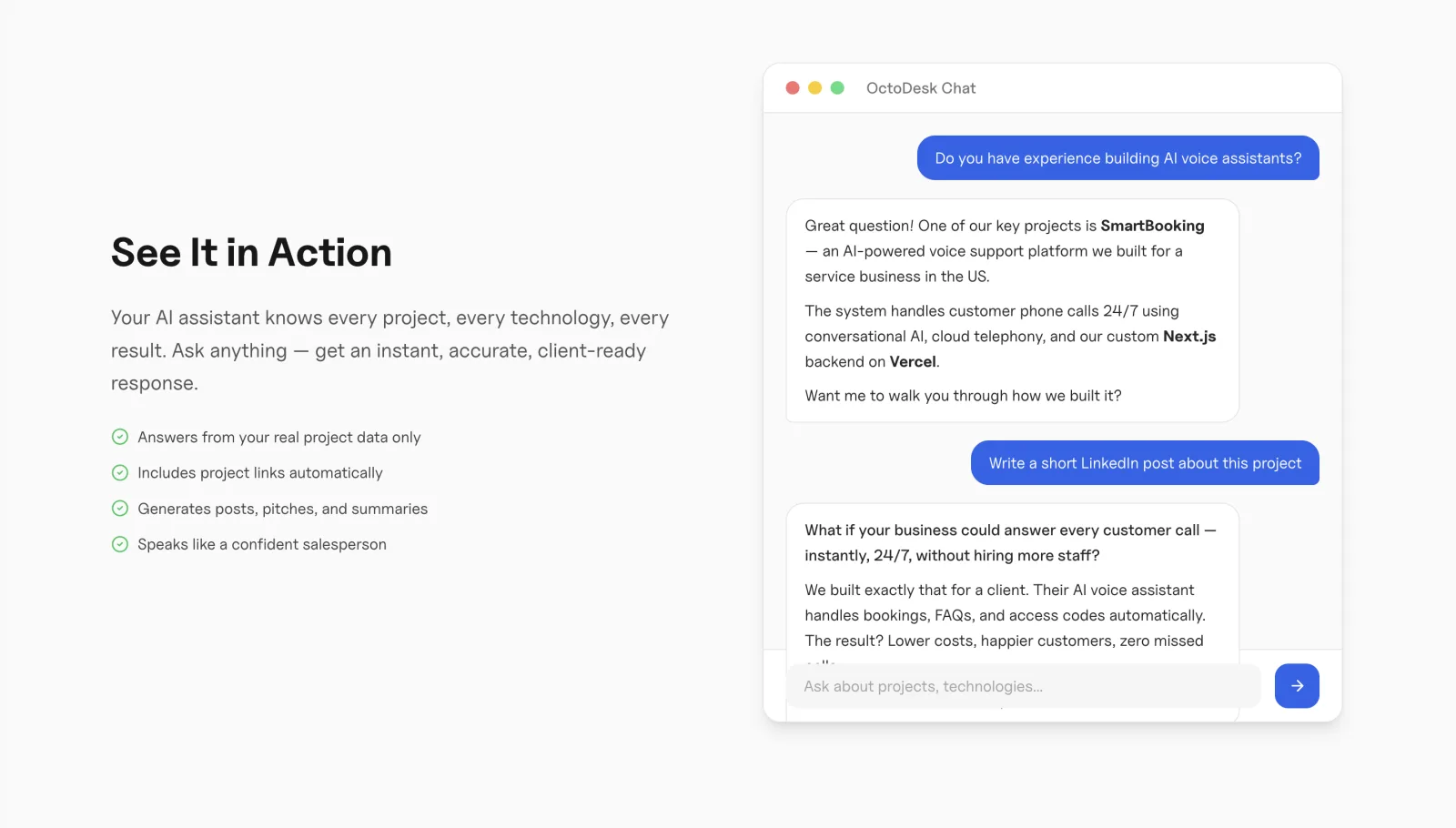
On top of that sits the sales chat: ask a question in natural language and get an instant, client-ready response with project links included automatically, plus generated LinkedIn posts, pitches and case study summaries. An anti-hallucination layer keeps every answer bound to retrieved content, so the assistant answers from real project data or says nothing at all. The app runs on Next.js 16 and React 19 with TypeScript and Tailwind, Drizzle ORM over PostgreSQL, NextAuth v5 for authentication, and OpenRouter for multi-model LLM access, which keeps the platform free to switch models as better ones ship.
The result
Response time to a client inquiry dropped from around an hour to roughly 10 seconds, a 10x improvement in how fast the team can reply. Project knowledge now lives in one indexed knowledge base instead of individual inboxes and folders, so knowledge silos are gone and continuity survives personnel changes: when someone leaves, their projects stay searchable and sellable.